Did you notice “Lift Every Voice and Sing,” the Black National Anthem, was sung at George Floyd’s funeral?

James Weldon Johnson’s song, “Lift Every Voice and Sing” was the inspiration for Augusta Savage’s statue for the 1939 World’s Fair. Augusta was given the daunting task of making a sculpture that would highlight the African-American gift of song and music. In my book Graven Images, her friend James asks, “How can you make a song into a sculpture? A song isn’t something you see.”

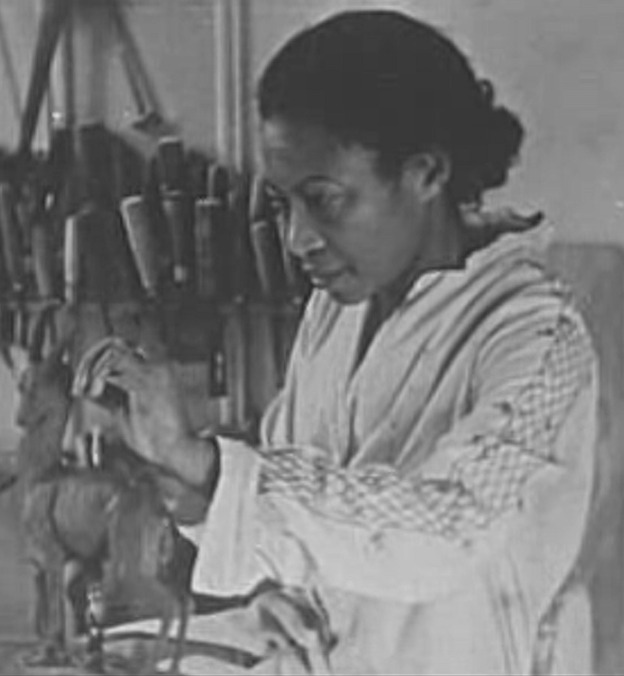
Well, she could, and here she is in the process of making the sculpture.

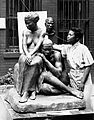
The finished project was a harp–16 feet tall. The strings were a line of singing children. The base was a gigantic arm and hand with the fingers curving up, symbolizing God’s hand. A kneeling young man offered a plaque with notes to represent the musical gift of music to the American people. It was the most popular piece of sculpture at the fair.

If you are in Jacksonville, see

AUGUSTA SAVAGE:RENAISSANCE WOMAN

Augusta Savage at work on The Harp, 1935 to 1845, displayed at the New York World's Fair from 1939 to 1940.

Augusta Savage at work on The Harp, 1935-1945, New York World’s Fair (1939-1940).  Photographs and Prints Division, Schomburg Center for Research in Black Culture, The New York Public Library, Astor, Lenox and Tilden Foundations.

FRIDAY, OCTOBER 12, 2018 TO SUNDAY, APRIL 7, 2019

Organized by guest curator Jeffreen M. Hayes, Ph.D.

This exhibition features nearly 80 works of art, including sculptures, paintings, and works on paper, and is the first to reassess Harlem Renaissance artist Augusta Savage’s contributions to art and cultural history in light of 21st-century attention to the concept of the artist-activist. The fully illustrated companion catalogue presents the most up-to-date scholarly research, re-examines Savage’s place in the history of American sculpture and positions her as a leading figure who broke down the barriers she and her students encountered while seeking to participate fully in the art world.  

On my visit to West Palm Beach this week, I saw where Augusta Savage lived from 16-28 years old

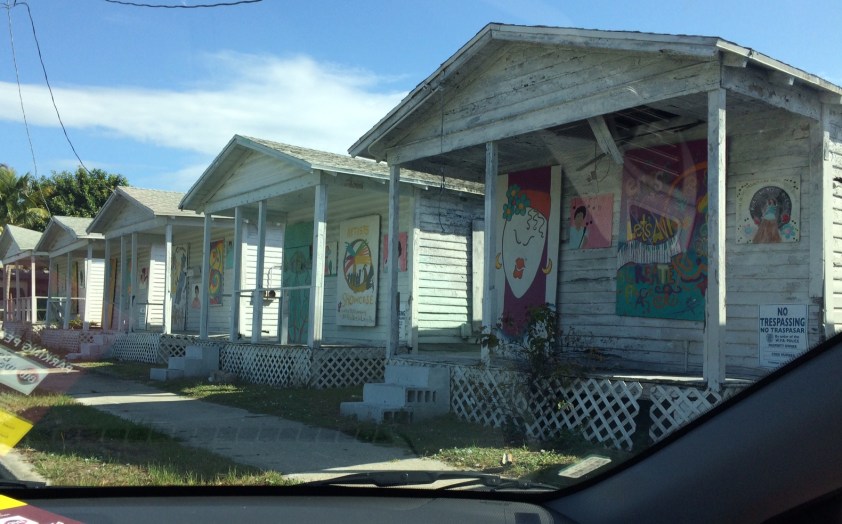
Augusta’s family moved to West Palm Beach, Florida in about 1908. Gussie and her one-year -old daughter moved here also. They lived in homes like these. Artwork has been added recently for a lively touch. Gussie and her daughter Irene had their own place a few doors down from her parents. The very basic frame dwellings were put up to house African-Americans who worked for the extravagant new hotels in Palm Beach. Gussie and her mother were laundresses for the hotels. On my recent book tour, a resident of West Palm Beach said she didn’t think these were the homes where Gussie’s family lived, because the famous Okeechobie Hurricane probably would have blown them down. However, I think the homes were probably similar to this.

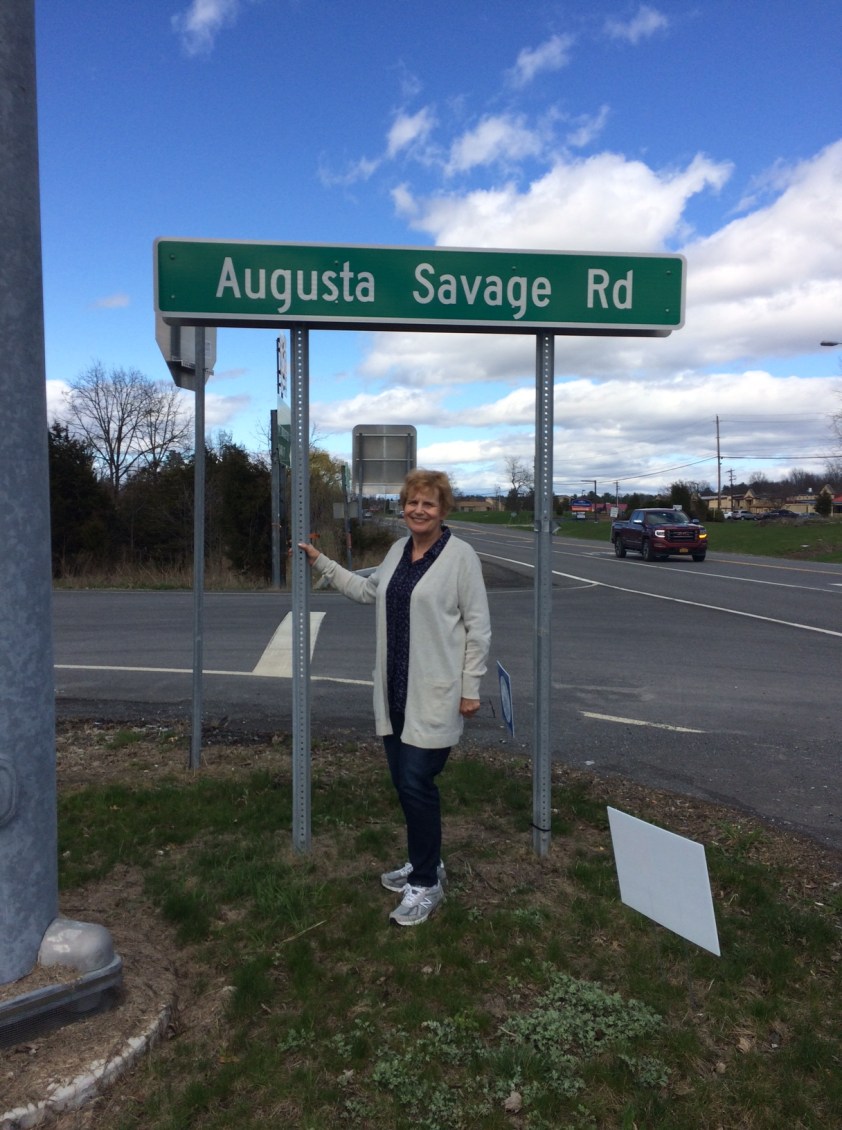
Augusta Savage Road in Saugerties

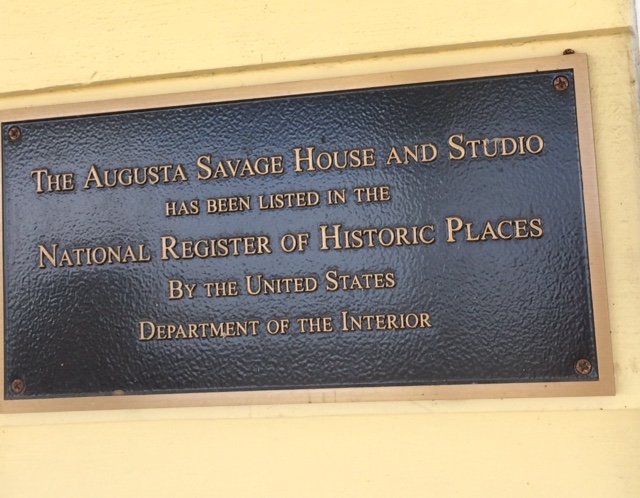
This is the road to the house Augusta lived in when she left New York City.  Here is the road sign that the community chose to replace the one that originally said “Nigger Road. (After a while one of the g’s was taken out to make the sign look like NIG ER Road). Augusta Savage was well-received in Saugerties when she came in the 1940s. However, she chose to spend most of her time tending her little farm, taking notes at a laboratory, and visiting with the neighbor children. She did about seven works of art in Saugerties but left the art world for the most part…while only in mid-life.